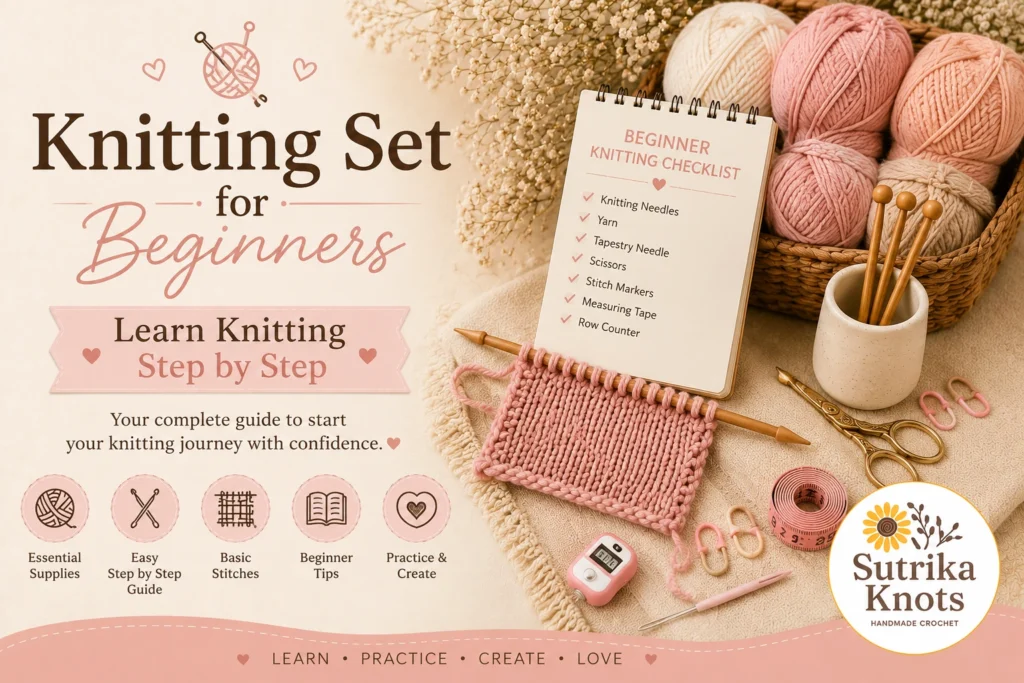
Knitting looks intricate from the outside, but it’s built from just a handful of repeated moves. Once you know what belongs in a beginner knitting set and learn the core steps in order, most patterns become a matter of repetition rather than mystery. This guide walks through exactly what to buy, and how to knit step by step from your first cast-on to your first finished piece.
What’s in a Good Knitting Set for Beginners
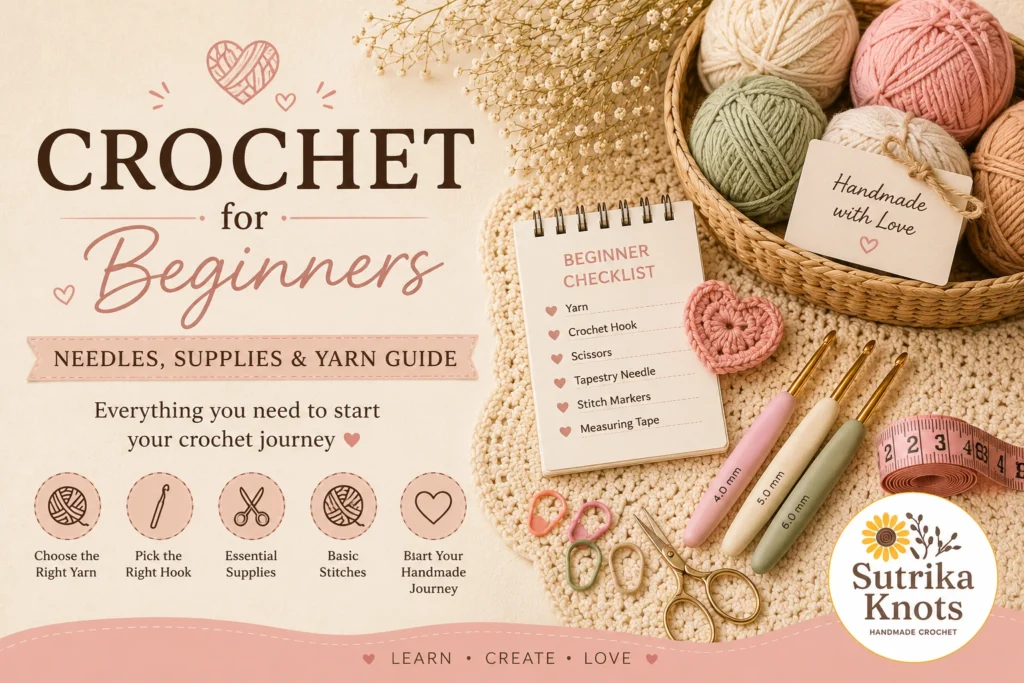
A knitting set for beginners doesn’t need to be elaborate. Here’s what actually matters when you’re starting out:
Must-haves:
- A pair of knitting needles (see sizing below)
- Beginner-friendly yarn
- Scissors
- A tapestry/yarn needle (for weaving in ends)
Genuinely useful, but optional:
- Stitch markers (to mark the start of a round or a pattern repeat)
- A row counter
- A small project bag to keep everything together
If you’re buying a pre-packaged kit, check that it includes at least these basics rather than just needles and a single skein — a proper starter set saves you a second trip to buy the pieces you’re missing.
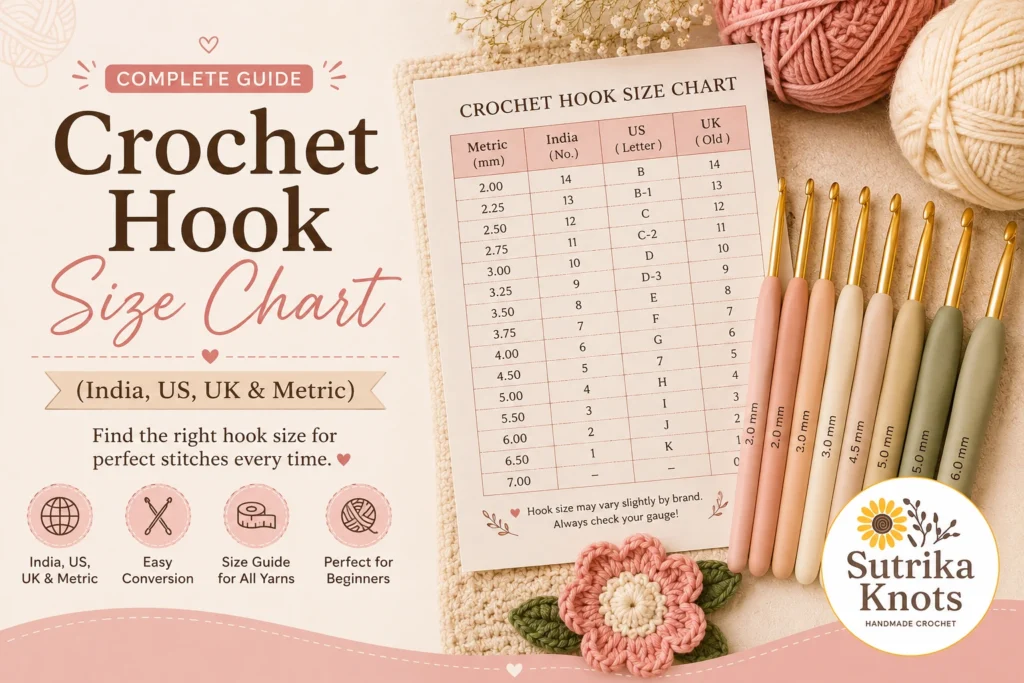
Choosing Knitting Needles for Beginners
Needle size affects how easy your first few rows feel. For beginners:
| Needle Size | Best For | Beginner-Friendly? |
| 2.0–3.0 mm | Fine yarn, delicate lace | Harder — small stitches, easy to lose track |
| 4.0–5.0 mm | Worsted/medium yarn | Best starting range |
| 5.5–6.5 mm | Bulky yarn, quick projects | Good second step |
| 8mm+ | Super bulky/jumbo yarn | Fast results, less precision |
Recommendation for your first pair: 4mm–5mm needles, in a straight (not circular) style to start — straight needles are simpler to manage while you’re still learning to hold your tension.
A note on needle material: bamboo/wood needles are grippier and beginner-friendly since stitches are less likely to slide off; metal needles glide faster once you’re more experienced; plastic/acrylic needles are a lightweight, affordable starting option.
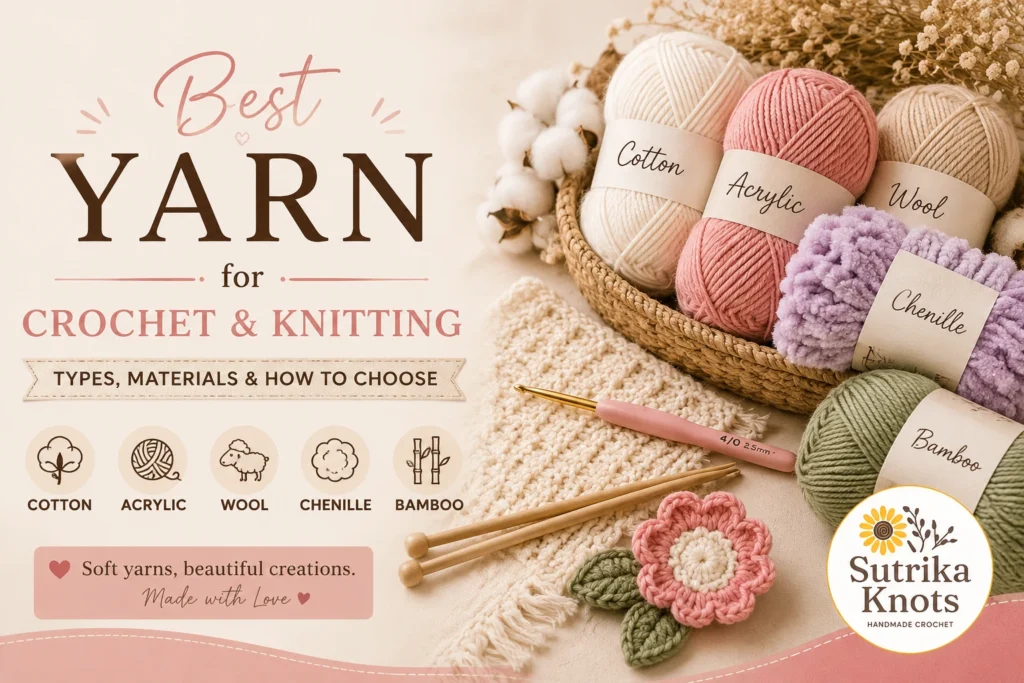
Choosing Yarn for Your Beginner Knitting Set
Pick yarn the same way you’d pick your crochet needles — for ease, not for how advanced it looks:
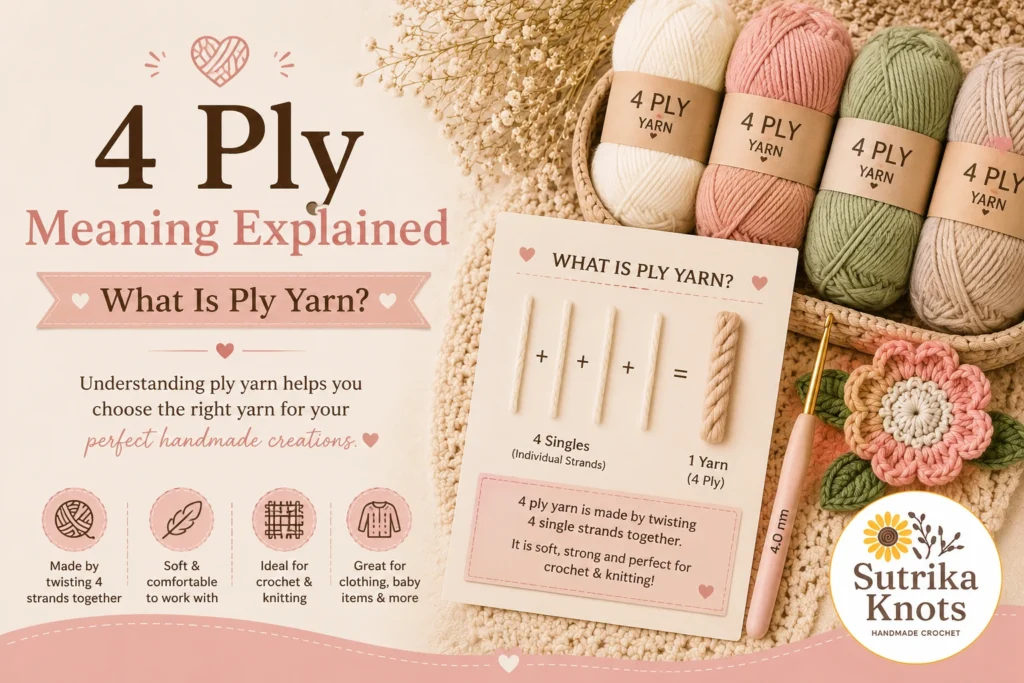
- Weight: Worsted or Aran (medium-weight) — thick enough to see each stitch clearly
- Fibre: Acrylic or cotton — both are affordable, forgiving, and easy to correct mistakes in
- Colour: A light, solid colour rather than variegated or dark shades, so your stitches stay easy to see
Save fuzzy, textured, or very fine yarns for later — they hide your stitches while you’re still learning to read your work.
Learn Knitting Step by Step: The Core Techniques
Every knitting project builds on the same handful of steps, done in this order:
1. Cast On
Casting on creates your foundation row — the first set of loops on your needle. This is always the very first step of any knitting project, and getting an even tension here makes the rest of the piece easier to work.
2. The Knit Stitch
The knit stitch is the most basic stitch in knitting. Worked on every row, it creates a fabric with a bumpy texture on one side (garter stitch) — the easiest starting pattern for total beginners.
3. The Purl Stitch
The purl stitch is the knit stitch’s counterpart. Alternating knit and purl rows (or combining them within a row) creates stockinette fabric — the smooth “V” pattern seen in most sweaters — and is usually the second technique beginners learn.
4. Increases and Decreases
Once knit and purl feel comfortable, increases (adding stitches) and decreases (removing stitches) let you shape your work — for sleeves, hats, and anything that isn’t a flat rectangle.
5. Bind Off
Binding off finishes your work by securing the last row of stitches so they can’t unravel. This is always the final step of a piece, done once you’ve reached your desired length or shape.
Your First Knitting Project: What to Make
Start with something small and forgiving so you can finish quickly and build confidence:
- A garter stitch swatch — just practice the knit stitch in straight rows
- A dishcloth — flat, useful, and a great way to practice tension
- A simple scarf — combines length practice with a real, wearable result
- A beanie — introduces basic shaping once you’re comfortable with the fundamentals
Avoid starting with fitted garments or anything requiring precise sizing — those are much easier once cast-on, knit, purl, and bind-off feel natural.
Common Beginner Mistakes to Avoid
- Starting with needles too small or too large — small needles make stitches hard to see; oversized needles make fabric loose and uneven.
- Holding yarn too tightly — this causes hand fatigue and makes stitches hard to slide across the needle; relax your grip as you practice.
- Skipping a practice swatch — a quick swatch before your real project helps you catch tension issues early.
- Miscounting stitches — use stitch markers, especially when you start increases and decreases, to avoid losing track mid-row.
- Jumping straight to garments — build confidence with flat, simple pieces first.
FAQs: Knitting for Beginners
What should be in a beginner knitting set? At minimum: a pair of 4mm–5mm needles, worsted or Aran weight yarn in a solid light colour, scissors, and a tapestry needle for weaving in ends. Stitch markers and a row counter are helpful extras.
What size knitting needles are best for beginners? 4mm to 5mm straight needles are the easiest starting size — large enough to see stitches clearly and simple to manage while you’re still learning tension.
What’s the easiest way to learn knitting step by step? Learn the sequence in order: cast on, the knit stitch, the purl stitch, then increases/decreases, and finally bind off. Most patterns are built from repeating this same sequence.
Is knitting harder to learn than crochet? Not necessarily harder, but different — knitting holds multiple live stitches on two needles at once, while crochet works one stitch at a time with a single hook, which some beginners find easier to track and fix mistakes in.
What’s the difference between knit and purl stitches? The knit stitch is worked from front to back and creates a bumpy texture when repeated every row; the purl stitch is worked from back to front and, combined with knit stitches, creates the smooth “V” pattern of stockinette fabric.
How long does it take to learn basic knitting? Most beginners feel comfortable casting on and knitting within a few practice sessions, and can complete a simple project like a dishcloth or swatch within their first week of regular practice.
New to fibre crafts and curious about crochet too? Explore Sutrika Knots’ handmade crochet pieces — our flowers, bouquets, and keychains use many of the same yarn-handling basics covered in this guide.