“Yarn weight” doesn’t refer to how heavy a skein feels in your hand — it refers to how thick the strand is. Understanding crochet yarn sizes and weights is one of the most useful skills for picking the right yarn for a pattern, substituting yarn confidently, and avoiding a project that turns out too stiff, too loose, or the wrong size entirely.
What Does “Yarn Weight” Actually Mean?
Yarn weight is a standardized way of describing thickness, not mass. It tells you roughly how many stitches and rows you’ll get per inch, and which hook size the yarn is designed to pair with. The thicker the yarn, the fewer stitches it takes to cover the same area — and the faster a project works up.
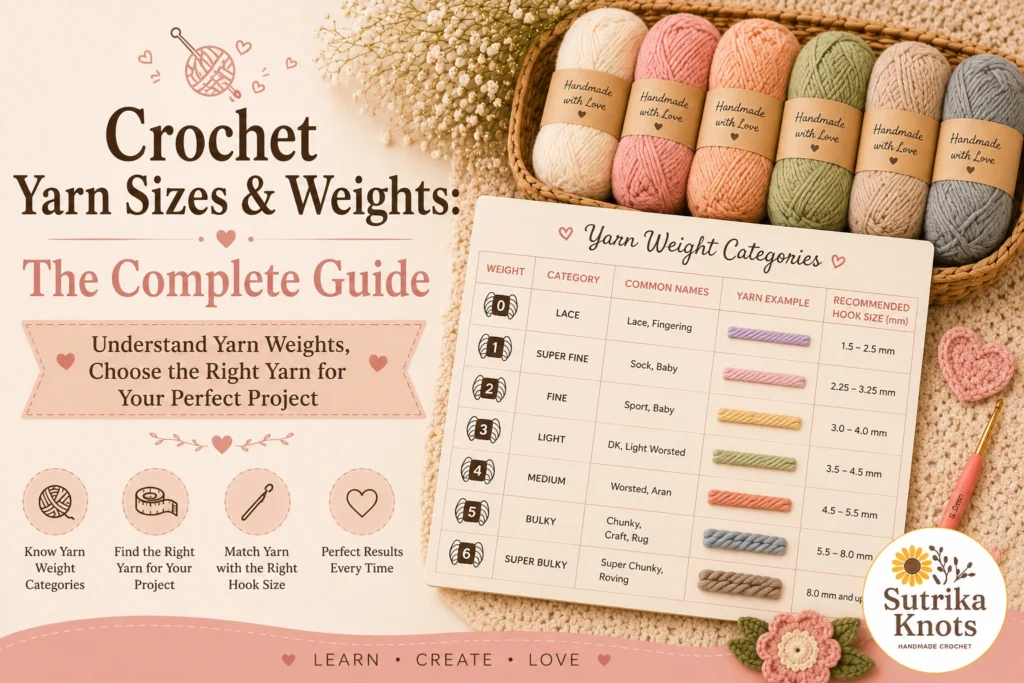
The Standard Crochet Yarn Weight Chart
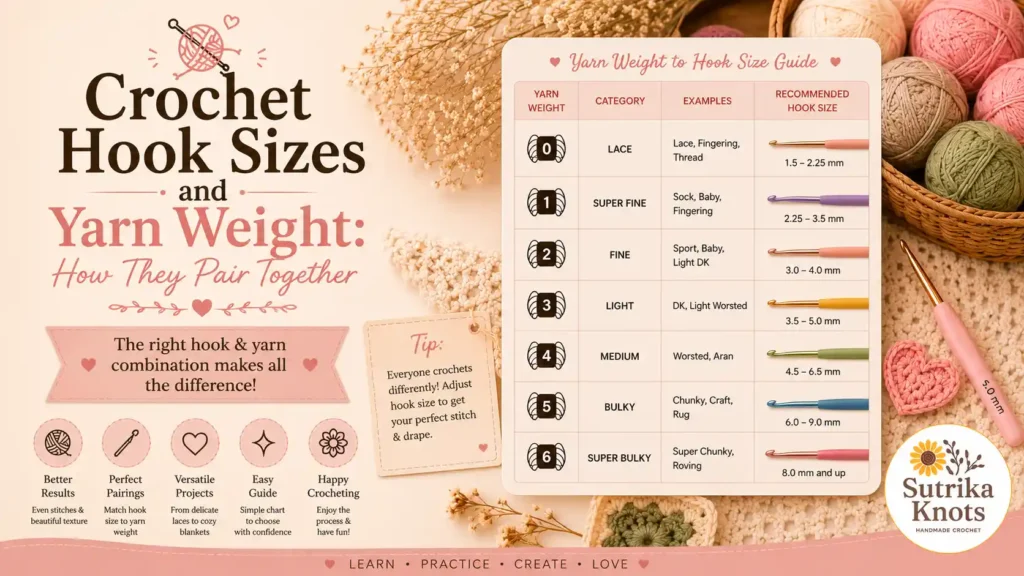
Most yarn labels use a numbered system (0–7) alongside a descriptive name. Here’s the full breakdown with matching hook sizes:
| Weight # | Common Name | Hook Size (mm) | Typical Use |
| 0 | Lace / Thread | 1.5–2.25 mm | Doilies, fine lace, thread crochet |
| 1 | Super Fine / Fingering | 2.25–3.5 mm | Baby items, socks, shawls |
| 2 | Fine / Sport | 3.5–4.5 mm | Light garments, baby blankets |
| 3 | Light / DK | 4.5–5.5 mm | Everyday garments, accessories |
| 4 | Medium / Worsted / Aran | 5.5–6.5 mm | Sweaters, bags, amigurumi, blankets |
| 5 | Bulky | 6.5–9 mm | Quick projects, home décor |
| 6 | Super Bulky | 9–15 mm | Chunky blankets, rugs |
| 7 | Jumbo | 15 mm+ | Arm crochet, giant blankets |
Tip: Indian yarn labels sometimes use both the international name (like “DK” or “Aran”) and the numbered system, so check both if a pattern references only one.
How to Read a Yarn Label for Size Information
A well-labelled yarn ball or cake will usually show:
- Weight category (name and/or number)
- Recommended hook size range
- Gauge (stitches and rows per 10cm/4 inches)
- Total length and weight (e.g. 100g / 150m)
If a label is missing this information, you can still estimate weight by comparing thickness against a known yarn, or by checking how many wraps fit around a ruler in one inch (a rough method sometimes called a “wraps per inch” test).
Matching Yarn Size to Your Project
Different weights suit different project types:
- Lace/Fingering (0–1): doilies, fine amigurumi details, baby wear
- DK/Light (2–3): everyday garments, lightweight accessories, summer wear
- Worsted/Aran (4): the most versatile all-purpose weight — bags, blankets, amigurumi, beginner projects
- Bulky/Super Bulky (5–6): quick makes, textured throws, rugs
- Jumbo (7): oversized blankets and statement pieces made in a fraction of the usual time
If you’re new to crochet, weight 4 (worsted/Aran) paired with a 5mm–6mm hook is the easiest combination to start with — thick enough to see stitches clearly, without being unwieldy.
How Much Yarn Do You Actually Need?
Yarn requirements depend on more than just the project type — they shift based on:
- Project dimensions — a larger blanket or garment obviously needs more yarn
- Yarn weight — thicker yarn covers more area per gram, but a project may still need a similar total length depending on the stitch pattern
- Stitch pattern density — textured stitches like puff, popcorn, or bobble stitches use noticeably more yarn than basic single or double crochet
- Your personal tension — tighter gauge uses more yarn per row than looser gauge
A safe rule of thumb: buy one extra ball beyond your calculated estimate, especially for garments, blankets, or gifts — this also protects you from dye-lot mismatches if you need to buy more later.
Substituting Yarn Weights in a Pattern
If you can’t find the exact yarn a pattern calls for, match by weight category first, then check the label’s recommended hook size and gauge against the pattern’s stated gauge. Swapping within the same weight category (e.g. one worsted-weight cotton for another) is usually safe; jumping a full weight category up or down changes your finished measurements and yarn requirements significantly.
FAQs: Crochet Yarn Sizes & Weights
What are the standard crochet yarn weights?
The standard system runs from 0 (lace/thread) to 7 (jumbo), with each number corresponding to a hook size range and typical project use, as shown in the chart above.
What yarn weight is best for beginners?
Weight 4 (worsted/Aran) paired with a 5mm–6mm hook is the easiest starting point — thick enough to see stitches clearly and versatile enough for most beginner projects.
How do I know what size yarn I have if the label is missing information?
Compare its thickness against a yarn of known weight, or use a wraps-per-inch test — wrap the yarn around a ruler for one inch and count the wraps to estimate its category.
Does crochet use more yarn than knitting for the same project?
Generally yes, since crochet stitches tend to be denser than knit stitches, meaning a crochet version of the same project usually needs more total yarn length.
Can I substitute a different yarn weight than the pattern calls for?
You can, but it will change your finished project’s size and the total yarn needed — substituting within the same weight category (e.g. one worsted-weight yarn for another) is safest.
Should I buy extra yarn for my project?
Yes — buying one extra ball beyond your estimate is a common safeguard, especially for garments, blankets, or anything where running short partway through would be disruptive.
Curious what these yarn weights look like in a finished piece? Browse Sutrika Knots’ handmade crochet flowers, bouquets, and gift sets — or explore custom orders for a piece made to your own specifications.