Those small fuzzy knots that show up on a well-worn sweater or blanket are called pills, and they’re one of the most common complaints about handmade or knitted fabric. “Anti pilling” is the term used for yarns and fabric treatments designed specifically to reduce this. This guide covers exactly what anti pilling means, how an anti-pilling finish works, and which fibres are most likely to need it.
Anti Pilling Meaning: What Does It Actually Mean?
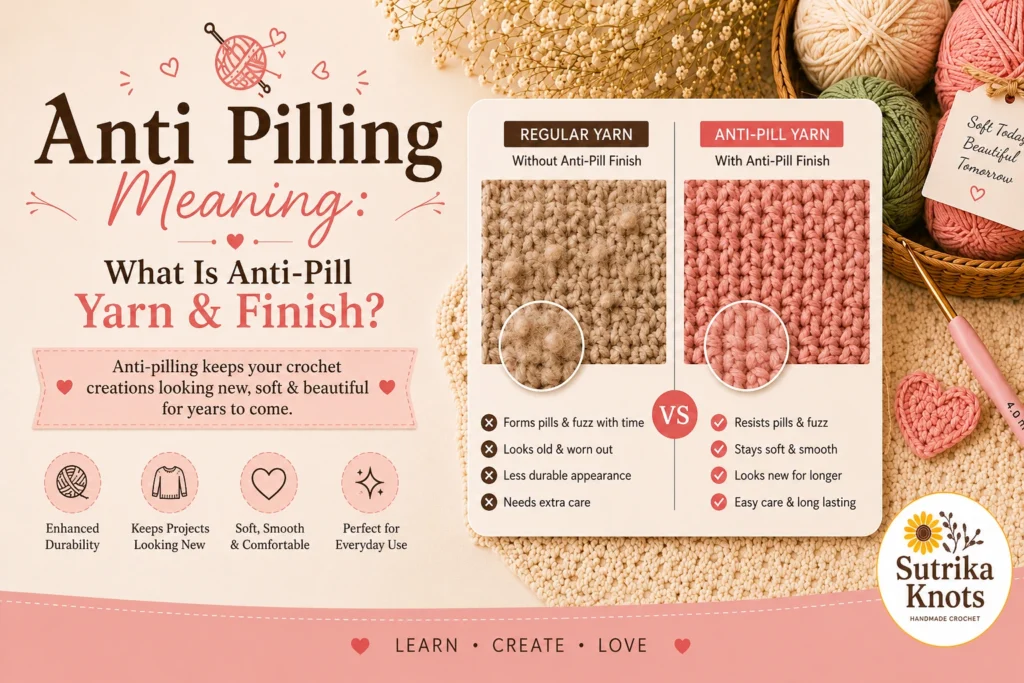
Anti pilling describes a yarn or fabric that has been made or treated to resist the formation of pills — those small balls of tangled fibre that form on a fabric’s surface from friction and everyday wear. The term applies to two related things:
- Anti-pill yarn — yarn manufactured with a fibre structure or treatment designed to reduce pilling from the start
- Anti-pilling finish — a treatment applied to yarn or finished fabric afterward, specifically to reduce future pilling
Both aim for the same outcome: keeping a finished piece looking smooth and new-looking for longer, even with regular handling and washing.
What Causes Pilling in the First Place?
Pilling happens when loose, short fibres on a yarn’s surface work themselves free through friction — rubbing against skin, other fabric, or a bag strap — and then tangle together into small balls instead of falling away completely. Fibres that are shorter, looser, or less tightly spun are more prone to breaking free this way.
What Is an Anti-Pilling Finish?
An anti-pilling finish is a treatment applied during or after yarn manufacturing that changes how easily surface fibres break loose. This can involve:
- Tighter spinning or plying, which locks fibres in place more firmly
- A chemical or mechanical surface treatment that reduces fibre shedding
- Blending in fibres specifically chosen to resist pilling
The result is a yarn where fewer fibres escape to the surface in the first place, so fewer pills have the chance to form.
Which Yarns Need Anti-Pilling Treatment Most?
Pilling isn’t equally common across all fibres:
| Fibre | Pilling Tendency | Notes |
| Acrylic | High | Most common candidate for anti-pill treatment |
| Wool (untreated) | Medium-High | Natural fibre, but shorter fibres can still shed |
| Cotton | Low | Sheds less due to fibre structure |
| Wool blends | Medium | Depends on blend ratio and treatment |
| Merino wool | Low-Medium | Finer, longer fibres pill less than standard wool |
Because synthetic fibres like acrylic are especially prone to pilling, anti-pill treatment is most commonly seen — and most useful — on acrylic and acrylic-blend yarns.
Is Anti-Pill Yarn Completely Pill-Proof?
No — anti pilling reduces pilling, it doesn’t eliminate it entirely. With enough friction and wear over time, even anti-pill yarn can develop some pills. The real difference is in degree: anti-pill yarn typically pills less, more slowly, and with smaller, easier-to-remove pills compared to untreated yarn of the same fibre type.
Why Anti-Pill Yarn Matters for Your Projects
- Longer-lasting appearance — pieces stay smoother through regular wear and handling
- Lower maintenance — less frequent need to shave or trim off pills
- Better for high-friction items — anything that rubs against skin, bags, or furniture benefits most
Best Projects for Anti-Pill Yarn
Anti-pilling matters most for items that see frequent handling or friction:
- Sweaters, cardigans, and everyday garments
- Scarves, hats, and gloves worn close to skin or outerwear
- Blankets and throws used regularly
- Baby items, which are washed and handled often
For low-friction décor pieces like wall hangings or occasional-use items, pilling is less of a practical concern, so the choice matters less.
How to Care for Anti-Pill Yarn Projects
Even anti-pill yarn benefits from gentle handling:
- Wash on a gentle cycle or by hand where possible, to reduce friction during cleaning
- Avoid excessive agitation or high heat drying, which accelerates fibre breakdown
- Turn garments inside out before washing to reduce surface friction on the visible side
- Gently remove any pills that do form with a fabric shaver rather than pulling them off, which can damage the surrounding stitches
FAQs: Anti Pilling
What does anti pilling mean?
Anti pilling refers to yarn or fabric made or treated to resist forming the small fuzzy knots (pills) that develop on fabric surfaces from friction and wear.
What is an anti-pilling finish?
An anti-pilling finish is a treatment applied to yarn during or after manufacturing — through tighter spinning, fibre blending, or surface treatment — that reduces how easily loose fibres break free and tangle into pills.
Is anti-pill yarn completely pill-proof?
No. Anti-pill yarn significantly reduces pilling but doesn’t prevent it entirely — with enough wear, even anti-pill yarn can develop some pills, though typically fewer and smaller than untreated yarn.
Which yarn fibres pill the most?
Acrylic tends to pill the most among common craft yarns, followed by standard wool; cotton and finer wools like merino generally pill less due to their fibre structure.
Do I need anti-pill yarn for every project?
Not necessarily — it matters most for items with regular friction, like garments, scarves, and frequently used blankets. Low-friction décor pieces benefit less from anti-pill treatment.
How do I remove pills once they form?
Use a fabric shaver or pill remover to gently shave pills off the surface rather than pulling them by hand, which can stretch or damage the surrounding stitches.
Want to see smooth, long-lasting crochet in action? Browse Sutrika Knots’ handmade crochet flowers, bouquets, and gift sets — or explore custom orders for a piece made to your own specifications.