Yarn weight tells you how thick a strand is. Hook size determines how tightly or loosely that strand gets worked. Neither one works well in isolation — the real skill in crochet is understanding how crochet hook sizes and yarn weight work together, and what changes when you shift one without the other.
Yarn Weight, in Plain Terms
Yarn weight describes the thickness of the strand, not how heavy the ball feels in your hand. Every weight category represents a range of thickness rather than one fixed size, which is why two “worsted weight” yarns from different brands can still feel slightly different in hand.
- Thinner yarn → lighter, more delicate fabric, more stitches per project
- Thicker yarn → chunkier, warmer fabric, fewer stitches needed to cover the same area
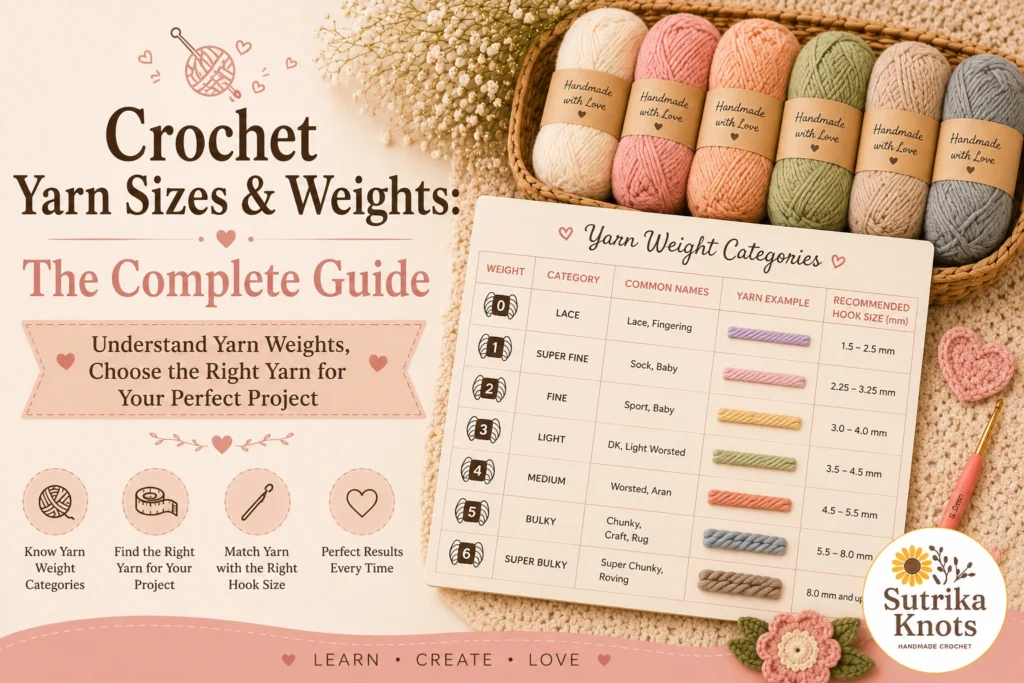
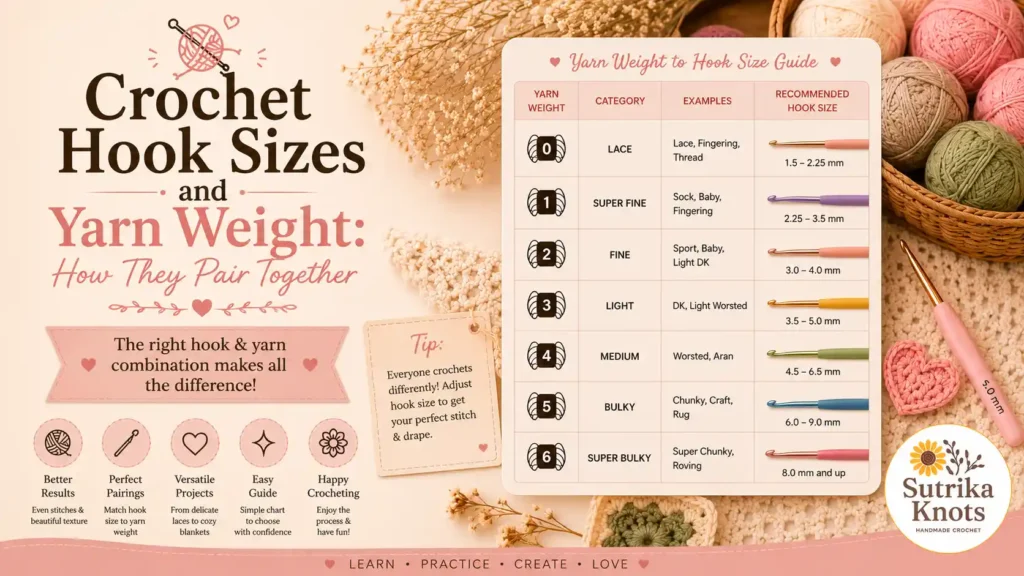
The Standard Crochet Yarn Weights and Their Matching Hook Sizes
| Yarn Weight | Weight # | Hook Size Range | Fabric Result |
| Lace / Fingering | 0–1 | 1.5–3.5 mm | Delicate, airy, best for fine detail |
| Sport / DK | 2–3 | 3.5–4.5 mm | Light-medium, neat stitch definition |
| Worsted / Aran | 4 | 5.0–6.5 mm | Medium-firm, most beginner-friendly |
| Bulky / Super Bulky | 5–6 | 6.5–9 mm | Chunky, warm, fast to work up |
| Jumbo | 7 | 9–15 mm+ | Extra thick, statement pieces |
This chart is your starting point — but it’s not the whole story. The exact hook you choose within a weight’s range changes how the finished fabric behaves.
What Happens When You Size the Hook Up or Down
Even within the same yarn weight, your hook choice shifts the outcome:
- Smaller hook (within range): tighter, denser fabric — good for structural items like bags, baskets, or amigurumi that need to hold their shape
- Larger hook (within range): looser, drapier fabric — good for scarves, shawls, and anything that should move and flow
- Hook too small for the yarn: stitches become hard to work, yarn splits, hands tire quickly
- Hook too large for the yarn: fabric looks gappy, loses structure, and stitch definition becomes hard to see
This is why two crocheters using the “correct” weight/hook pairing from a chart can still get noticeably different fabric — hook choice within the range is a design decision, not just a technical rule.
Matching Yarn Weight to Project Type
Beyond the general chart, here’s how weight and hook choice typically play out by project:
- Amigurumi and toys: worsted weight (4) with a hook slightly smaller than the yarn label recommends, for a tight, stuffing-proof fabric
- Garments (sweaters, cardigans): DK to Aran weight, hook size matched to the pattern’s stated gauge exactly, since fit depends on precise stitch dimensions
- Bags and baskets: worsted to bulky weight with a smaller hook for structure, or cotton yarn for natural stiffness
- Scarves and shawls: DK to bulky weight with a hook toward the larger end of the range, for soft drape
- Home décor (coasters, blankets): worsted to super bulky, depending on desired density and speed
Why Gauge Still Matters More Than the Chart
A weight/hook chart gives you a starting point, not a guarantee. Everyone’s natural tension is slightly different — some crocheters work tighter, others looser, even with identical yarn and hook. That’s why patterns list a gauge (stitches and rows per 10cm/4 inches): it tells you the exact result the designer achieved, so you can check your own swatch against it before starting the full project.
If your swatch comes out with more stitches per 10cm than the pattern’s gauge, your tension is tighter than intended — try a slightly larger hook. If you have fewer stitches than the gauge, your tension is looser — try a slightly smaller hook.
Reading a Yarn Label for Hook Size Information
Most yarn labels include:
- Weight category (name and/or number)
- Recommended hook size range — usually shown as a small range, not one exact size
- Gauge — typically listed as stitches/rows per 10cm square
- Total length and weight of the ball or skein
Treat the label’s hook size as a sensible midpoint, then adjust based on your own gauge swatch and the fabric feel you want for that specific project.
FAQs: Crochet Hook Sizes and Yarn Weight
How do I know what hook size to use for my yarn weight?
Check the yarn label’s recommended hook size range first, then crochet a small gauge swatch — if your tension runs tighter or looser than the pattern calls for, adjust the hook size up or down by 0.5mm.
Does using a bigger hook with the same yarn change the outcome?
Yes. A larger hook with the same yarn weight produces looser, drapier fabric with visible gaps between stitches, while a smaller hook produces a tighter, denser fabric — useful for structured items like bags or amigurumi.
What’s the best hook size for worsted weight yarn?
Worsted weight (weight 4) typically pairs with a 5.0–6.5mm hook, making it one of the most beginner-friendly combinations since stitches stay easy to see and control.
Why do two crocheters get different results with the same yarn and hook?
Natural tension varies from person to person, which is why gauge swatches matter — the same yarn and hook can still produce a tighter or looser fabric depending on how firmly each person pulls their yarn.
Should I always follow the hook size listed on the yarn label?
Treat it as a helpful starting point rather than a fixed rule — your final hook choice should also account for your personal gauge and the drape or structure you want in the finished piece.
See these weight-and-hook pairings in finished form: browse Sutrika Knots’ handmade crochet flowers, bouquets, and gift sets — or explore custom orders for a piece made to your own specifications.