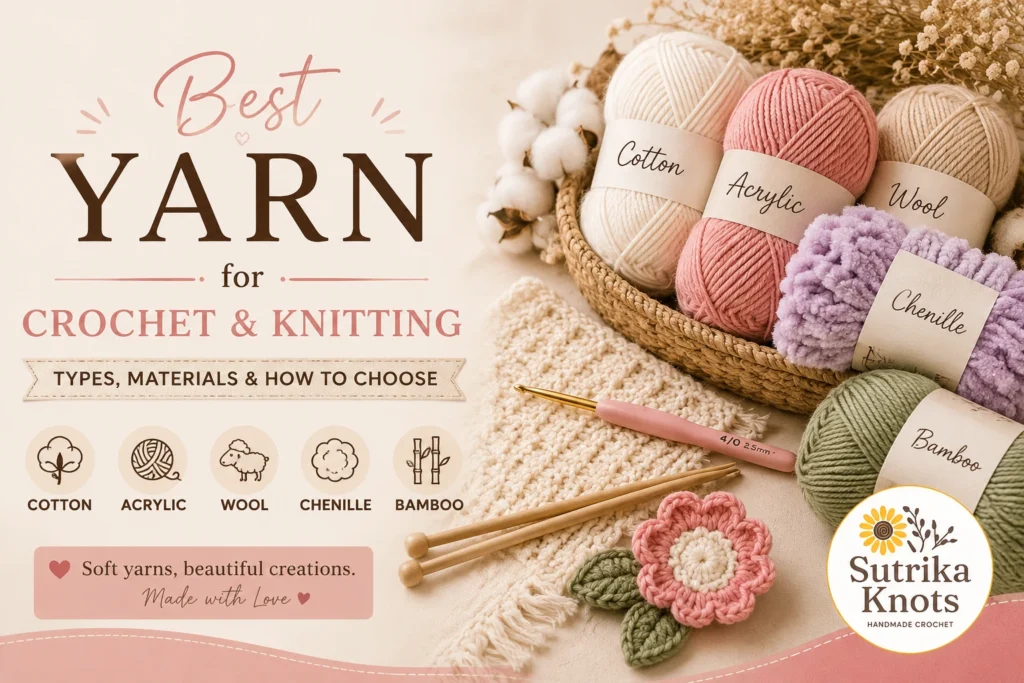
There’s no single “best” yarn — the right choice depends entirely on what you’re making, your skill level, and how the finished piece will be used. This guide breaks down the different types of yarn and crochet thread, the yarn materials worth knowing, and which yarn actually works best for common projects like bags, scarves, and beginner practice pieces.
Different Types of Yarn: The Main Categories
Yarn is generally grouped in three ways: by fibre (what it’s made of), by weight (how thick it is), and by construction (how the strands are put together). Understanding all three helps you answer “which yarn is best for crochet” for your specific project, rather than relying on a single generic recommendation.
Yarn Material: The Main Fibre Types
Cotton
Breathable, strong, and holds stitch definition well. A good quality yarn choice for bags, home décor, dishcloths, and summer wear. Cotton doesn’t stretch much, so it’s less forgiving for garments that need give, but excellent for structured items.
Acrylic
Affordable, widely available, and machine washable. A reliable choice for beginners and for items that need to hold up to everyday use — blankets, toys, and amigurumi. Acrylic comes in a huge range of colours and is generally easier on a budget than natural fibres.
Wool
Warm, elastic, and excellent for garments that need to hold their shape — sweaters, caps, and mittens. Wool has natural memory, meaning stitches bounce back into shape, which is part of why it’s often considered the best wool for knitting projects like sweaters and cardigans. It typically needs gentler washing than cotton or acrylic.
Merino Wool
A softer, finer variety of wool with less itch than standard wool — a popular pick for baby items and garments worn close to the skin.
Wool Blends
Combine wool with acrylic or other fibres to balance warmth, softness, durability, and cost. Often a practical middle ground between pure wool’s warmth and acrylic’s easy care.
Chenille / Feather Yarn
Chenille yarn (sometimes searched as “feather yarn” for its soft, fluffy texture) has a plush, velvety pile that makes it popular for blankets, cushions, and soft toys. It’s cozy and visually striking, but its texture can hide stitch definition, so it’s better suited to simple stitch patterns rather than intricate detail work.
Recycled and Blended Fibres
Yarns blended from recycled fibres are an increasingly common option for eco-conscious makers, offering similar handling to standard cotton or acrylic blends while reducing textile waste.
Different Types of Crochet Thread
“Crochet thread” specifically refers to very fine, tightly plied yarns used for delicate, detailed work rather than everyday garments or home décor. Common types of crochet thread include:
- Cotton crochet thread — the most widely used type, prized for crisp stitch definition in doilies, lace edgings, and fine motifs
- Mercerized cotton thread — treated for extra sheen and strength, often used in decorative and heirloom-style pieces
- Metallic or blended thread — fine thread combined with metallic strands for decorative accents, ornaments, and jewellery-scale crochet
Crochet thread is measured on its own numbering system (often labelled by a number like 10 or 30 — the higher the number, the finer the thread), separate from standard yarn weight categories.
Best Yarn for Crochet Beginners
If you’re new to crochet, the yarn you choose matters as much as the hook. For crochet yarn for beginners, look for:
- Weight: Worsted or DK (medium) — thick enough to see stitches clearly, thin enough to work up quickly
- Fibre: Cotton or acrylic — both are forgiving, affordable, and easy to correct mistakes in
- Colour: Light, solid shades rather than variegated or dark colours, so each stitch stays visible
Avoid fuzzy, textured, or very fine yarns for your first few projects — they make it hard to see where each stitch begins and ends.
Best Yarn for Crochet Bags
Bags need structure and durability more than softness, since they’re handled constantly and often carry weight. The best options are:
- 100% cotton — holds its shape well and doesn’t stretch out of shape under load
- Cotton blends — add a touch of durability and drape
- T-shirt yarn (fabric yarn) — thick, sturdy, and quick to work up for tote-style bags
Avoid pure acrylic or wool for structural bags — both tend to stretch or sag over time compared to cotton.
Best Yarn for Scarves (Crochet)
Scarves are worn close to the skin and need to feel comfortable, so softness matters more here than in bags or rugs:
- Wool or wool blends — warm and elastic, ideal for cold-weather scarves
- Merino wool — softer against the neck, less itch than standard wool
- Acrylic — a budget-friendly, easy-care alternative that still feels soft in modern anti-pill varieties
- Cotton — a lighter option for transitional-weather or decorative scarves rather than deep winter wear
Avoid stiff or scratchy fibres for scarves — comfort against skin should be the deciding factor over pure aesthetics.
Types of Yarn for Knitting
While crochet and knitting yarns overlap heavily, some considerations shift slightly for knitting:
- Wool and wool blends remain the top choice for garments needing stretch and shape memory — commonly cited as the best wool for knitting sweaters, since knit fabric relies more on stretch than crochet fabric does
- Cotton works well for knitted dishcloths, summer tops, and home décor, though it has less give than wool
- Acrylic is a practical, affordable choice for blankets and everyday knitwear
- Novelty yarns (chenille, boucle, eyelash/feather yarn) add texture to knitted scarves and accessories, though they can be harder to see stitches in while learning
How to Spot Good Quality Yarn
When shopping online, without being able to touch the yarn, a few signals point to good quality:
- Consistent ply and twist — the yarn should look evenly spun in product photos, without visible thick-thin patches
- Fibre content clearly listed — reputable yarn always states its fibre composition (e.g. “100% cotton,” “acrylic-wool blend”)
- Recommended hook/needle size and gauge on the label — quality yarn brands specify this so you can match tools correctly
- Colourfastness notes — especially important for deep or saturated colours, to avoid bleeding during washing
- Reviews mentioning splitting or pilling — a strong signal of lower-quality fibre or looser ply construction
Quick Reference: Best Yarn by Project
| Project | Best Fibre Choice | Why |
|---|---|---|
| Beginner practice / first projects | Cotton or acrylic, worsted/DK weight | Easy to see stitches, forgiving of mistakes |
| Bags | Cotton, cotton blends, T-shirt yarn | Holds shape under weight |
| Scarves | Wool, merino, soft acrylic | Comfortable against skin, warm |
| Sweaters/garments | Wool, merino, wool blends | Stretch and shape memory |
| Blankets | Acrylic, cotton, chenille | Easy care, cozy texture |
| Doilies/lace/fine detail | Cotton crochet thread, mercerized cotton | Crisp stitch definition |
| Amigurumi/toys | Cotton or acrylic, worsted weight | Firm stitches, washable |
FAQs: Choosing the Best Yarn
Which yarn is best for crochet overall?
There’s no single best yarn for every project — cotton and acrylic in worsted or DK weight are the most versatile starting points, while wool suits garments needing warmth and stretch.
What is the best yarn for crochet beginners?
A light-coloured, solid worsted or DK weight yarn in cotton or acrylic is easiest to learn on, since stitches are simple to see and mistakes are easy to correct.
What’s the difference between yarn and crochet thread?
Crochet thread is a much finer, tightly plied type of yarn used for delicate lace and doily work, measured on its own numbering system rather than standard yarn weight categories.
What is feather yarn used for?
Feather yarn (a fluffy, textured yarn similar to chenille) is commonly used for soft blankets, cushions, and plush toys, though its texture makes it less suited to detailed stitch work.
Is wool or acrylic better for knitting?
Wool offers more natural stretch and warmth, making it a common choice for sweaters, while acrylic is more affordable and easier to care for — the better choice depends on your project’s warmth needs and care preferences.
How can I tell if yarn is good quality when buying online?
Check that fibre content, recommended hook/needle size, and gauge are clearly listed, look for evenly spun yarn in product photos, and check reviews for mentions of splitting or pilling.
Ready to put the right yarn to work? Explore Sutrika Knots’ handmade crochet pieces or browse our flowers, bouquets, and keychains — each made with fibres chosen to match the project.